Studying in the USA: A Guide for International Families
Planning a US education for your child? Learn about F-1 student visas, financial requirements, parents' immigration options, employment rules, and post-graduation pathways.
Studying in the USA: A Guide for Globally Mobile Families
How international families can plan for a US university education, understand student visa requirements, avoid common immigration pitfalls, and prepare for their children's future.
For internationally mobile families, sending a child to study in the United States can be an investment in much more than academic achievement. It can open doors to international professional networks, innovative research, entrepreneurial opportunities, and careers with a global outlook.
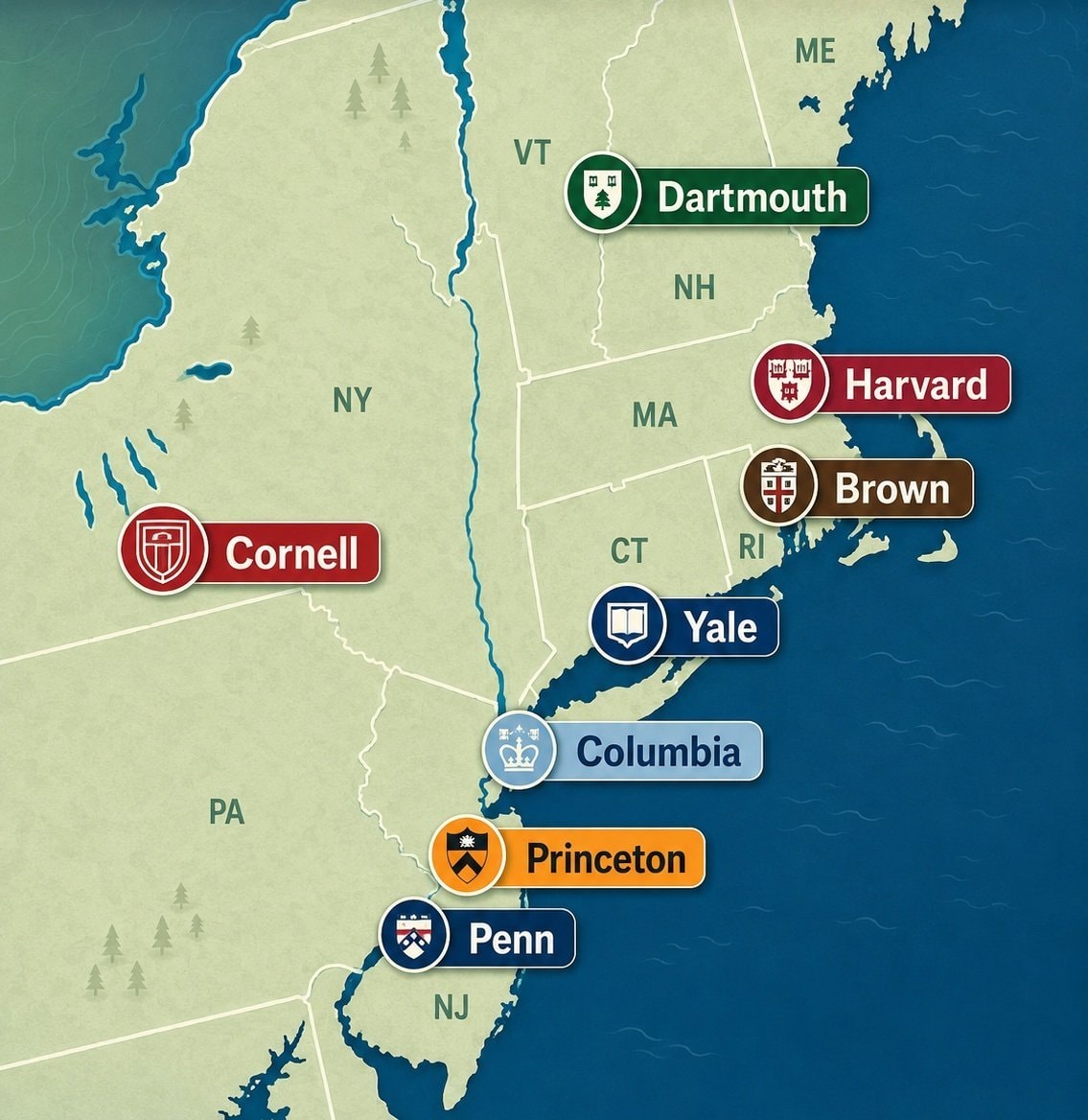
From Ivy League institutions such as Harvard, Yale, Princeton, and Columbia to leading universities across California, the Midwest, and the rest of the country, American higher education attracts students from around the world.
But gaining admission to a US university is only one part of the process.
Families must also consider student visa requirements, educational costs, immigration compliance, travel arrangements, and the options available when a student graduates. Parents who already live and work across multiple countries may have additional questions about how their child's education fits into their broader family mobility plans.
This guide explains the main requirements, common pitfalls, and frequently asked questions that internationally mobile families should consider when planning a US education.
1. Why International Families Choose the United States
The United States remains an attractive destination for students seeking an internationally recognized education and exposure to one of the world's largest economies.
Although the Ivy League receives considerable attention, excellent opportunities exist at public universities, private colleges, specialist institutions, and other accredited educational establishments throughout the country.
For globally mobile families, several factors can make the United States particularly appealing.
A globally recognized education
American universities offer a wide range of undergraduate and postgraduate programs, including business, engineering, computer science, medicine-related fields, economics, law, and the liberal arts.
Many institutions combine academic study with research, practical projects, and interdisciplinary learning.
The best choice will depend on the student's academic interests, career ambitions, preferred learning environment, and financial circumstances. A university's reputation alone should not determine the decision.
International networks and professional relationships
Studying in the United States can introduce students to classmates, faculty members, alumni, entrepreneurs, and professionals from different countries and industries.
These relationships may become valuable throughout a student's career, particularly for those who eventually work in international business, technology, finance, consulting, research, or entrepreneurship.
Exposure to American business and innovation
Students can gain first-hand experience of American society, business practices, and professional culture.
For families who operate businesses internationally or maintain commercial interests in the United States, this experience may be particularly relevant to the next generation.
Opportunities after graduation
Eligible international students may have opportunities to undertake practical training related to their studies after graduation. Some may subsequently qualify for other US immigration categories, depending on their circumstances.
However, a US university degree does not automatically provide a right to work permanently or live indefinitely in the United States.
Families should understand the immigration rules before making assumptions about their children's long-term future.
2. What Immigration Status Does an International Student Need?
For most international students pursuing a university degree in the United States, the relevant visa category is the F-1 student visa.
The appropriate category depends on the nature of the educational program and the student's circumstances.
The F-1 student visa
The F-1 category is generally used by international students attending an eligible academic institution, including a university, college, or qualifying private school.
Before applying for an F-1 visa, a student normally needs to:
- Apply to an institution certified by the Student and Exchange Visitor Program (SEVP).
- Receive an offer of admission and complete the school's enrollment requirements.
- Obtain Form I-20, the Certificate of Eligibility for Nonimmigrant Student Status.
- Pay the applicable Student and Exchange Visitor Information System (SEVIS) fee.
- Complete Form DS-160, the online nonimmigrant visa application.
- Apply for the visa and attend an interview if required.
The US Department of State provides the official application instructions through its Student Visa guidance.
University admission and visa approval are separate decisions. Even a student admitted to a highly selective university must independently satisfy the applicable immigration requirements.
The J-1 exchange visitor category
Some students participate in exchange programs under the J-1 exchange visitor category rather than the F-1 category.
A J-1 visa may be appropriate for certain university exchange programs, sponsored educational initiatives, and other qualifying arrangements.
The program sponsor determines eligibility and issues the relevant Form DS-2019.
Certain J-1 participants may also be subject to a two-year home-country physical presence requirement, depending on the applicable rules and circumstances. This can affect subsequent immigration plans.
Families should therefore confirm the student's actual immigration category rather than assuming that every international student follows the same process.
Is a tourist visa sufficient?
Generally, no.
A visitor visa or entry under the Visa Waiver Program is not a substitute for the appropriate student immigration authorization when the purpose is to undertake a US degree program.
Limited recreational, non-credit study may be permitted under visitor rules, but degree-seeking students must follow the requirements applicable to their intended course of study.
Families should establish the correct immigration route before the student travels.
3. What Documents Are Required for an F-1 Student Visa?
The exact documentation and procedures may vary according to the applicant's circumstances and the US embassy or consulate handling the application.
Common requirements include:
- A valid passport.
- A completed Form DS-160 confirmation page.
- Form I-20 issued by the student's SEVP-certified institution.
- Evidence of payment of the applicable visa application fee.
- A photograph meeting the relevant requirements.
- Academic records, transcripts, diplomas, or other evidence of educational preparation.
- Evidence that sufficient funds are available to pay tuition, living expenses, travel, and other anticipated costs.
- Any additional documents requested by the consular officer.
Students should also be prepared to explain their proposed course of study, why they selected the institution, and their plans after completing the program.
The consular officer will assess whether the applicant qualifies for the visa under US law. Admission to a university does not guarantee approval.
Families should consult the relevant US embassy or consulate for local procedures, interview arrangements, and current processing times.
Financial documentation deserves particular attention
For families with international businesses, investments, or assets held in several countries, demonstrating the source and availability of educational funding may require careful preparation.
Depending on the circumstances, useful supporting documentation may include bank statements, investment records, business financial statements, or evidence of a parent's income.
The objective is to demonstrate that the family can meet the expected educational and living costs.
Where financial support comes from a family business, a trust, or assets held through several entities, families should make sure that the supporting documents accurately explain the arrangements.
The documentation requested by the university and the documentation required for the visa application may differ. Both should be addressed.
4. How Early Should Families Begin Planning?
Ideally, families should start preparing well before the intended university entry date.
University admissions deadlines, standardized testing where required, scholarship applications, financial documentation, visa appointments, and accommodation arrangements all need to be coordinated.
A practical planning sequence is:
12–18 months before enrollment
- Research universities and academic programs.
- Review admission criteria and application deadlines.
- Compare tuition, accommodation, and living costs.
- Investigate scholarships and financial assistance.
- Check passport validity and any relevant family travel constraints.
6–12 months before enrollment
- Submit university applications according to the relevant deadlines.
- Complete financial aid applications where applicable.
- Evaluate offers of admission and confirm the preferred institution.
- Review the school's procedures for issuing Form I-20.
- Begin organizing evidence of financial support.
Once the university issues Form I-20
- Review the document carefully.
- Pay the applicable SEVIS fee.
- Complete Form DS-160.
- Follow the embassy or consulate's visa application instructions.
- Prepare for the interview and allow sufficient time for processing.
Before departure
- Confirm that the student has the necessary travel documents.
- Arrange accommodation, health insurance, and local support.
- Review the rules for maintaining student status.
- Make sure the student understands the restrictions on employment and international travel.
The US Department of State notes that new F-1 and M-1 student visas may generally be issued up to 365 days before the program begins, but students cannot enter the United States in that status more than 30 days before the program start date.
Families should verify the current rules and their own travel arrangements before booking flights.
5. Can Parents Accompany Their Children to the United States?
This is an important question for internationally mobile families, especially those accustomed to moving together between countries.
An F-1 student visa does not give a parent the right to live in the United States with the student.
The F-2 dependent category is generally available to the F-1 student's spouse and unmarried children under 21, subject to the applicable requirements. It does not extend to the student's parents.
Parents who wish to spend time in the United States while their child studies must independently qualify for an appropriate immigration status.
Depending on their circumstances, parents may consider temporary visits under the applicable visitor rules or may already have another valid basis for living in the United States.
A visitor classification does not authorize a parent to reside in the United States indefinitely. Parents must comply with the conditions of their own status and the period of admission granted to them.
Families considering a longer stay should not assume that their child's university enrollment provides an immigration solution for the entire family.
What if the parents already have US immigration status?
The analysis may be different if a parent is already a US citizen, lawful permanent resident, or nonimmigrant visa holder.
The child's eligibility to study and the immigration category needed for that child will depend on the family's actual circumstances.
In some cases, the child may qualify for a status derived from a parent's immigration category. In others, the student may need to qualify independently.
It is important to review the relevant facts before choosing a route.
For families who are also considering investor visa options, our overview of US investor visas explains the main categories available to internationally mobile families.
6. What Happens If the Student Is Under 18?
Families sending a younger child to the United States for high school or another educational program should pay particular attention to the practical arrangements.
In addition to immigration compliance, parents may need to address:
- School admission and enrollment requirements.
- Accommodation and supervision.
- Emergency contacts and medical consent arrangements.
- School rules for minors living away from home.
- Travel permissions and arrangements for school holidays.
- Appropriate health insurance.
- The school's requirements for a parent, guardian, or other responsible adult.
Requirements vary between institutions and states. Families should confirm the arrangements directly with the school and obtain appropriate legal advice where necessary.
For F-1 students attending public secondary school, special restrictions apply, including limits on the period of attendance and reimbursement of the full unsubsidized per-capita cost of education. These restrictions do not apply in the same way to private schools.
Parents should not assume that the rules for a university student automatically apply to a child attending a US high school.
7. How Much Does It Cost to Study in the United States?
The financial commitment can be substantial, particularly at private universities.
The overall cost may include:
- Tuition and mandatory university fees.
- Accommodation and meals.
- Health insurance.
- Books, equipment, and other academic expenses.
- Travel between the United States and the family's home country.
- Local transportation.
- Personal expenses and emergency funds.
Costs vary significantly by institution and location. Families should obtain the university's current published cost of attendance rather than relying on general estimates.
It is also sensible to prepare a multi-year budget. Tuition and living expenses may increase over the course of a degree program.
Are scholarships available to international students?
Yes. Some US institutions offer scholarships and financial assistance to international students, although eligibility, availability, and the application process vary.
Families should investigate funding opportunities early because financial aid applications may have deadlines that coincide with, or precede, university admission deadlines.
The US Department of State's EducationUSA resource provides guidance on financing US studies.
Financial assistance should not be assumed until the university confirms the award and its terms.
Can international students work to pay their expenses?
Employment is subject to specific immigration rules.
F-1 students may qualify for certain forms of employment, including permitted on-campus work and authorized practical training. Other off-campus employment generally requires a specific basis for authorization.
Students should not rely on unrestricted employment to finance their education.
Working without authorization can jeopardize immigration status and future US immigration opportunities.
Families should plan to cover the expected costs without assuming that the student will be able to take any job needed to make up a shortfall.
8. Maintaining Immigration Status While Studying
Obtaining the visa is only the beginning. Students must also comply with the conditions of their immigration status throughout their studies.
For F-1 students, important responsibilities include the following.
Maintaining the required course load
Students are generally required to pursue a full course of study, subject to specific exceptions and authorized reductions.
A student experiencing academic difficulties, illness, or other circumstances that may affect enrollment should contact the university's designated school official (DSO) before dropping classes or reducing the course load.
An apparently minor academic decision can have immigration consequences if the applicable procedures are not followed.
Keeping immigration records current
Students should remain in contact with the university's DSO and promptly address changes affecting their immigration records.
These may include changes in address, academic program, expected completion date, or plans to transfer to another institution.
The student should not assume that the university will automatically resolve every immigration issue without the student's involvement.
Transferring universities
An F-1 student may be able to transfer to another SEVP-certified institution, provided the applicable requirements are met.
However, the student must follow the appropriate transfer procedures and coordinate the transfer of the SEVIS record.
Withdrawing from classes or leaving one university before arranging the transfer may create complications.
Before changing institutions, students should speak to the DSO at their current school and the designated official at the new school.
Traveling internationally
International students should plan overseas travel carefully.
Before leaving the United States, they should confirm that they have the documents required for their intended return, including a valid passport, appropriate visa where required, and the necessary travel endorsement on Form I-20.
A valid immigration status inside the United States does not necessarily mean that a student can re-enter without difficulty after international travel.
Visa expiration, changes in circumstances, and pending immigration matters may require additional attention.
Students should consult their DSO and, where appropriate, an immigration attorney before traveling if their situation is complicated.
9. Can an International Student Stay in the United States After Graduation?
This is one of the most important questions for families thinking beyond university admission.
The answer depends on the student's eligibility, the type of program completed, and the immigration options available at that time.
Optional Practical Training (OPT)
Eligible F-1 students may apply for Optional Practical Training, commonly known as OPT, to obtain practical experience directly related to their major field of study.
Post-completion OPT can generally provide up to 12 months of employment authorization, subject to the applicable requirements and approval.
Students must follow the required procedures and should not begin employment before they are authorized to do so.
STEM OPT extension
Certain graduates with qualifying science, technology, engineering, and mathematics degrees may be eligible to apply for a 24-month STEM OPT extension.
Eligibility depends on the degree, the employment arrangement, the employer's compliance with applicable requirements, and the student's individual circumstances.
Not every science-related degree automatically qualifies.
The US Department of Homeland Security provides further information through its Study in the States resources.
What about H-1B or other work visas?
Some graduates may subsequently qualify for an employment-based immigration category.
For example, the H-1B category may be available for certain specialty occupations where the relevant employer, position, and employee satisfy the legal requirements.
However, H-1B eligibility is not automatic, and the category is subject to applicable filing rules and, in many cases, an annual numerical cap and selection process.
Other options may be relevant depending on the student's nationality, qualifications, professional achievements, employment arrangements, and longer-term career plans.
These may include certain employment-based immigrant categories or other temporary work classifications.
Families should not treat graduation, OPT, or a job offer as a guarantee of permanent residence.
Each potential route has separate requirements, and some involve employer sponsorship, additional applications, or lengthy processing periods.
For families who are also evaluating investor-based routes to US residence, our article on US investor visas provides a comparative overview of the EB-5, E-2, and L-1 categories.
10. How Can a US Education Fit Into a Family's Global Mobility Strategy?
For families with international business interests, investments, or residences in several countries, a child's education may form part of a wider long-term plan.
However, educational planning and immigration planning should remain distinct.
A family may wish to consider several questions.
Where will the child study?
The university's academic strengths, location, cost, and professional opportunities should drive the educational decision.
Where do the parents intend to live?
Parents may wish to continue operating businesses abroad, maintain a residence elsewhere, or spend time in the United States. Their immigration options need to be assessed independently.
Does the family anticipate a longer-term US presence?
If a parent or child may eventually seek to live or work in the United States, it is worth understanding the relevant immigration categories early.
What are the child's own plans after graduation?
The student may decide to pursue postgraduate study, accept an employment opportunity, start a business, or return to another country. Families should avoid making inflexible assumptions about a future that may evolve over several years.
Are there tax and financial implications?
US education can involve cross-border payments, assets, and family financial arrangements. Families should consider whether specialist tax advice is appropriate, particularly where parents or children may become US tax residents or hold assets across multiple jurisdictions.
A university education does not itself determine a person's US tax residency or immigration status. These are separate legal questions.
For globally mobile families, the objective is to understand the available options and make informed decisions as circumstances develop.
11. Common Pitfalls International Families Should Avoid
A successful US education requires more than an offer of admission and a plane ticket.
The following mistakes can create avoidable difficulties.
Pitfall 1: Assuming university admission guarantees a visa
A university decides whether to admit a student. The US government determines whether the student qualifies for the relevant visa.
Families should prepare the immigration application separately and allow sufficient time for the process.
Pitfall 2: Leaving the visa application until the last minute
Visa appointments, additional document requests, or administrative processing can delay travel.
Families should begin planning early and avoid making nonrefundable arrangements before confirming the relevant requirements.
Pitfall 3: Assuming parents can live in the United States through the child's student status
An F-1 student's parents do not qualify for F-2 dependent status merely because their child is studying in the country.
Parents need to establish their own lawful basis for any intended stay.
Pitfall 4: Treating a student visa as a work permit
Student status does not authorize unrestricted employment.
Students should confirm the applicable rules before accepting paid work, an internship, or another professional opportunity.
Pitfall 5: Ignoring changes in academic plans
Changing majors, dropping classes, transferring universities, or taking a leave of absence may affect immigration compliance.
Students should consult their DSO before making changes that could affect their enrollment.
Pitfall 6: Assuming a US degree guarantees permanent residence
Graduation may open professional opportunities, but the right to remain and work in the United States depends on separate immigration requirements.
Families should evaluate potential future routes without assuming that any particular category will be available.
Pitfall 7: Overlooking travel and visa renewal issues
Students may need a new visa to return to the United States after international travel if their existing visa has expired.
Other circumstances may also affect re-entry. Travel plans should be reviewed before departure.
Pitfall 8: Failing to plan for the period after graduation
OPT, postgraduate education, employment sponsorship, and departure from the United States all involve different requirements and deadlines.
Students should begin considering their next steps well before their current program ends.
12. Frequently Asked Questions
Can a foreign national study at an Ivy League university in the United States?
Yes. Ivy League universities accept international students, subject to their individual admission policies and requirements. Admission is highly competitive, and applicants should consult each institution for current application criteria.
An international applicant must also satisfy the applicable US immigration requirements before studying in the country.
Does a student need an F-1 visa to study in the United States?
Most international students pursuing a university degree use the F-1 category. However, the appropriate immigration category depends on the program and the student's circumstances. Some qualifying exchange programs use the J-1 category.
Can parents move to the United States when their child starts university?
Not automatically. The F-1 category does not provide dependent status to parents. Parents must independently qualify for an appropriate immigration category if they wish to stay in the United States.
Can a student enter the United States before university classes begin?
F-1 students generally cannot enter the United States more than 30 days before the program start date specified for the student. Families should confirm the relevant dates and travel requirements before booking.
Can international students work while studying?
Certain forms of employment may be permitted, subject to the applicable rules. On-campus employment and authorized practical training are examples. Students should obtain appropriate guidance before accepting employment and must not assume that their student status allows unrestricted work.
Can an international student work in the United States after graduation?
Eligible F-1 students may qualify for OPT. Some graduates in designated STEM fields may be eligible for a further 24-month extension. Other employment-based options may be available, depending on the circumstances.
None of these possibilities guarantees permanent residence.
Can a student change universities after arriving in the United States?
Potentially, yes. F-1 students may transfer to another SEVP-certified institution if they meet the applicable requirements and follow the required procedures.
They should coordinate the transfer with the relevant school officials before withdrawing or changing enrollment.
What is the difference between an F-1 and a J-1 visa?
The F-1 category is generally used for academic study at a university or college. The J-1 category is used for certain exchange visitor programs. The applicable category depends on the program and the student's circumstances. J-1 participants may be subject to a two-year home-country physical presence requirement that can affect future immigration plans.
How long can an F-1 student stay in the United States?
An F-1 student is generally admitted for the duration of status, meaning for as long as the student maintains a valid enrollment and complies with the applicable requirements. The student's authorized stay is not limited to the visa visa expiration date.
What official resources should families consult?
The US Department of State's Student Visa guidance and the Department of Homeland Security's Study in the States resources are the authoritative starting points. Families should consult these resources directly and seek qualified immigration advice for their specific circumstances.
This article is provided for general information purposes only. Immigration rules, procedures, and requirements can change. Families should obtain qualified legal advice before making decisions based on this content. JPA World Advisory Services does not provide legal advice.
Explore Topics
Written by
JPA World Research Team
Content creator and writer sharing insights and stories.