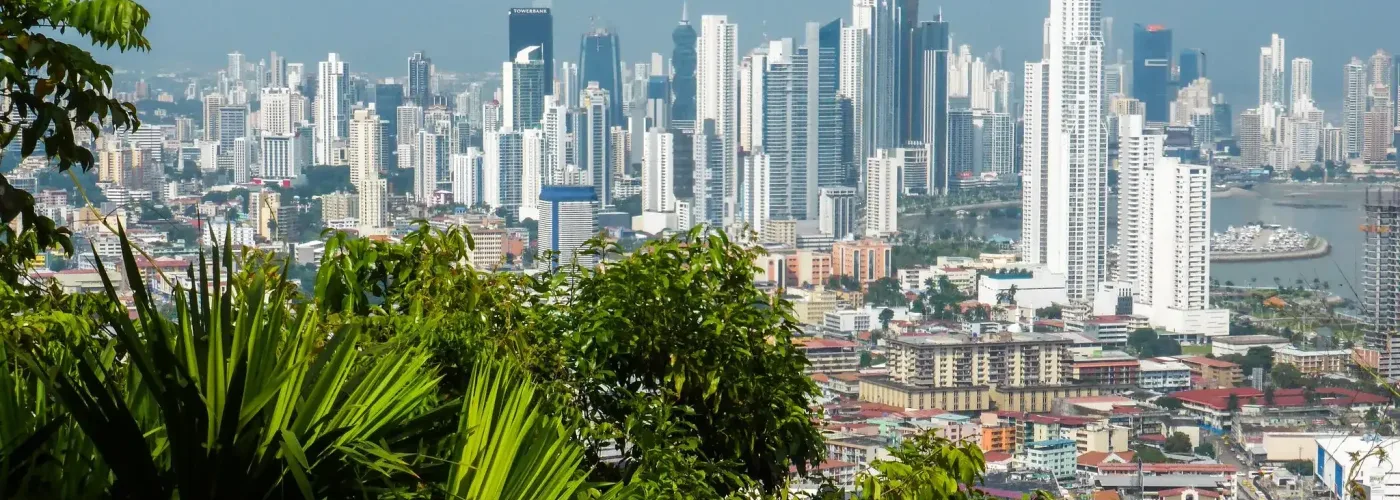

Overview
Panama is a Central American country with an established legal framework for foreign residency, an internationally connected financial sector, and a strategic location linking North and South America. Panama City serves as a regional business and financial hub.
Panama operates a territorial income tax system under which income classified as foreign-source is generally outside the scope of ordinary Panamanian income tax. However, determining the source of income depends on the nature of the underlying activity, and additional rules may apply to certain structures and income categories.
Panama offers several residency pathways for foreign nationals, including investment-based permanent residency and the Friendly Nations Visa. The appropriate route depends on the applicant's nationality, investment capacity, employment circumstances, and long-term objectives.
Available Pathways
Several residency routes are available:
Qualified Investor Visa
- Provides a direct route to permanent residency through qualifying investment.
- Under the rules effective September 16, 2026, the minimum investment is $300,000 in qualifying new, first-sale real estate or under an eligible promise-to-purchase arrangement; $500,000 in qualifying secondary-market real estate or eligible securities; $750,000 in a fixed-term deposit with a qualifying private bank; or $500,000 in a fixed-term deposit with Banco Nacional de Panamá or Caja de Ahorros.
- Specific eligibility, investment documentation, and holding-period requirements apply.
Friendly Nations Visa
- Available to nationals of designated countries, including the United States, the United Kingdom, Canada, and other eligible jurisdictions.
- Applicants must establish a qualifying economic connection to Panama, generally through employment with a Panamanian company, qualifying real estate investment of at least $200,000, or a fixed-term bank deposit of at least $200,000 maintained for three years.
- The route generally begins with two years of provisional residency, followed by a separate application for permanent residency, subject to the applicable conditions.
Other Routes
- Depending on individual circumstances, alternatives may include residency for retirees receiving qualifying lifetime pensions, business or economic investment categories, and other employment or special immigration arrangements.
- Eligibility and financial requirements vary by category.
Eligibility
Applicants must satisfy the legal requirements of their chosen immigration category and undergo the applicable government background and due diligence checks.
For the Qualified Investor Visa, applicants must demonstrate that the investment meets the prescribed conditions, that the funds originate from abroad, and that the capital belongs to the applicant and can be traced to a legitimate source. Investments held through legal entities are subject to additional ownership and beneficial-owner documentation requirements.
Friendly Nations applicants must hold an eligible nationality and demonstrate the required employment or investment connection. Nationality alone does not establish eligibility.
Additional requirements may include a valid passport, criminal record documentation, a medical certificate, authenticated civil-status documents, and evidence of financial solvency. Documents issued abroad may need to be apostilled or legalized and translated into Spanish.
Financial Requirements
Investment thresholds depend on the selected pathway.
Qualified Investor Visa
The qualifying investment generally must be maintained for at least five years.
- New, first-sale real estate: Minimum $300,000.
- Secondary-market real estate: Minimum $500,000.
- Qualifying promise-to-purchase arrangement: Minimum $300,000, subject to the prescribed contractual, payment, and security conditions.
- Qualifying securities investments: Minimum $500,000 through an appropriately licensed Panamanian securities firm.
- Fixed-term deposit with a qualifying private bank: Minimum $750,000.
- Fixed-term deposit with Banco Nacional de Panamá or Caja de Ahorros: Minimum $500,000.
Friendly Nations Visa
- Qualifying real estate investment: Minimum $200,000.
- Qualifying fixed-term bank deposit: Minimum $200,000, generally maintained for three years.
- Employment route: Requires a qualifying employment relationship with a Panamanian company and the applicable supporting documentation.
Other Routes
All amounts are indicative of the rules in force as of October 2026. Investment structures, transaction costs, government fees, and individual eligibility should be confirmed with qualified Panamanian legal counsel before committing funds.
- Financial requirements vary by category. Applicants should confirm the applicable thresholds with qualified Panamanian legal counsel.
Family Inclusion
Eligible family members may generally be included in residency applications, subject to the relevant category's requirements.
Depending on the route, eligible dependents may include a spouse, dependent children, and, where permitted, dependent parents. Additional documentation and financial requirements may apply to each dependent.
Applicants should confirm the applicable age limits, dependency criteria, and additional government fees before submitting an application.
Physical Presence Requirements
Physical presence requirements depend on the immigration category.
The Qualified Investor Visa does not generally require applicants to spend a minimum number of days in Panama each year. However, the applicable rules require the investor to visit Panama at least once every two years to maintain residency, and the investment must continue to satisfy the program's conditions.
Other residency categories may be subject to different conditions. Applicants should verify the applicable requirements before relying on a particular route for long-term international mobility.
Processing Times
Processing times vary according to the immigration category, the completeness of the application, the verification of investment documentation, and government processing.
The Qualified Investor framework provides for an expedited immigration decision following the required investment certification. The prescribed decision period is generally up to 30 working days after the relevant certification, although the overall application process may take longer.
Friendly Nations applications and subsequent applications for permanent residency follow their own procedures and timelines. Applicants should obtain a current estimate from qualified local counsel rather than rely on a fixed processing period.
Benefits & Limitations of the Program
- A territorial income tax system under which foreign-source income is generally not subject to ordinary Panamanian income tax.
- A direct permanent residency route through qualifying investment.
- A strategic location connecting North and South America.
- An established banking sector, international business environment, and regional transport connections.
- Access to residency options that may suit investors, entrepreneurs, employees, and retirees.
- The possibility of including eligible family members in a residency application.
Tax Considerations
Panama operates a territorial tax system. Income earned outside Panama is generally not subject to Panamanian income tax. Obtaining Panamanian residency does not automatically affect tax obligations in other countries. Independent tax advice is strongly recommended.
Permanent Residence or Citizenship
The Qualified Investor Visa provides a direct path to permanent residency. Panamanian citizenship by naturalisation is generally available after five years of continuous legal residence, subject to meeting the applicable requirements including language and other statutory conditions.
Application Process
Applications are submitted to the National Immigration Service of Panama (Servicio Nacional de Migración). Investment thresholds, eligibility requirements and procedures must be confirmed with qualified Panamanian legal counsel before an application is made. JPA World can provide an introductory briefing and refer clients to appropriate legal counsel.
Official Institutions
Always verify program details with the responsible government authority:
Servicio Nacional de MigraciónFrequently Asked Questions
Where is Panama and how can I get there from the United States?
Panama is a country in Central America, situated at the southern end of the isthmus connecting North and South America. It borders Costa Rica to the west and Colombia to the east, with the Pacific Ocean to the south and the Caribbean Sea to the north. Panama City, the capital, is home to the Panama Canal, one of the world's most strategically important waterways.
Panama is well connected to the United States by air. Direct flights operate from several major US cities, including Miami, New York (JFK), Houston, Atlanta, Los Angeles and Fort Lauderdale, among others. Flight times from Miami are approximately two and a half to three hours. Copa Airlines, the Panamanian national carrier, operates a hub at Tocumen International Airport in Panama City, with extensive connections throughout the Americas.
US citizens do not require a visa to enter Panama for stays of up to 180 days. A valid US passport and a return or onward ticket are generally required at the point of entry.
Does Panama require a minimum stay to maintain residency?
Panama does not impose a minimum annual stay requirement under most investor residency routes. However, applicants should confirm the applicable rules for their chosen category, as requirements may vary.
Is Panama income tax-free for foreign residents?
Panama operates a territorial tax system, meaning that income earned outside Panama is generally not subject to Panamanian income tax. This does not affect tax obligations in other countries. Independent tax advice is strongly recommended.
Can Panama residency lead to citizenship?
Panamanian citizenship by naturalisation is generally available after five years of continuous legal residence, subject to meeting the applicable requirements including language proficiency and other statutory conditions. Citizenship is not automatically granted upon obtaining residency.
What is the Friendly Nations Visa?
The Friendly Nations Visa is available to nationals of designated countries with which Panama maintains friendly relations. It requires establishing qualifying economic ties to Panama, such as employment, business ownership, or a qualifying investment. Eligibility and investment thresholds vary by route and nationality.
The list of designated friendly nations includes a broad range of countries across North America, Europe and Australasia, among others. Key examples include:
North America: United States, Canada, Mexico
Europe: United Kingdom, Germany, France, Spain, Italy, Netherlands, Sweden, Switzerland, Austria, Belgium, Portugal, Poland, Czech Republic, Hungary, Croatia, Serbia, Montenegro, and most other EU and EEA member states
Australasia: Australia, New Zealand
The full list is subject to change. Applicants should confirm current eligibility with qualified Panamanian immigration counsel before proceeding.
Does Panama residency provide access to the EU or Schengen Area?
No. Panama is not an EU or Schengen member state. Panamanian residency does not confer EU travel rights. The Panamanian passport provides visa-free or visa-on-arrival access to a number of countries; applicants should verify current access with official sources.
Can US citizens obtain residency in Panama, and how does it affect their US tax obligations?
Yes. US citizens can apply for Panamanian residency through several immigration pathways, including the Qualified Investor Visa, the Friendly Nations Visa (subject to its current eligibility requirements), and other qualifying residence categories. Applicants must satisfy the relevant investment, financial, employment or other requirements.
Panama operates a territorial tax system, meaning that income sourced outside Panama is generally not subject to Panamanian income tax, regardless of the individual's immigration status. However, obtaining Panamanian residency does not automatically change or eliminate US tax obligations.
US citizens residing in Panama should consider the following:
US income tax: US citizens generally remain subject to US federal income tax on their worldwide income, including income earned in Panama.
Foreign Earned Income Exclusion (FEIE): Eligible individuals may exclude a qualifying amount of foreign earned income if they meet the applicable bona fide residence or physical presence test. Investment income generally does not qualify.
Foreign Tax Credit: US taxpayers may claim credits for qualifying foreign income taxes paid, subject to applicable limitations. Panama's territorial tax system may limit the availability of such credits on foreign-source income.
Foreign financial account reporting: US citizens holding qualifying bank or financial accounts in Panama may have FBAR and FATCA reporting obligations.
State tax residency: Establishing residency in Panama does not automatically terminate tax residency in a US state. Individuals must consider the relevant state's domicile and residency rules.
Panama can offer an attractive international relocation option, particularly for individuals seeking a territorial tax environment and greater geographic flexibility. However, US citizens should not assume that acquiring Panamanian residency or spending most of the year outside the United States will eliminate their US tax obligations.
Independent advice from a qualified US international tax adviser is strongly recommended before relocating or making an investment.


